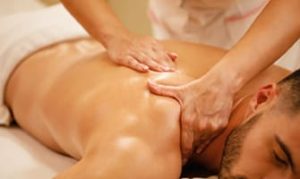
Post Injury Education And Home Programs Ajax
Post-injury education and home programs in Ajax are structured, clinician-designed recovery protocols that empower patients to manage their own healing between clinical visits and after discharge.
After a motor vehicle accident, workplace injury, or sports-related trauma, many people in Ajax and the surrounding Greater Toronto Area face a critical choice: passive recovery or active participation in their own rehabilitation. Prolife Wellness Retreat has spent over a decade helping patients understand that education and compliance with prescribed home exercises produce measurably faster functional gains than treatment alone.
The difference lies in specificity. Generic stretching routines miss the root cause of dysfunction. Clinician-prescribed programs address the exact tissues, movement patterns, and load tolerances that your injury produced.
The Problem: Injury Without Direction
A 47-year-old construction supervisor in Ajax sustained a lower back strain during a job site incident. After three days of rest and over-the-counter pain management, he attended his first physiotherapy appointment at Prolife Wellness Retreat with significant limitation in forward bending, standing tolerance, and night pain disrupting his sleep. Medical imaging showed no structural fracture, but his pain persisted at a level that threatened his return to work timeline.
Like many patients, he had received basic advice: "avoid heavy lifting" and "ice it." What he lacked was understanding of what had actually happened in his tissues, why certain movements hurt while others did not, and what specific actions would rebuild stability and strength. Without this framework, he defaulted to fear-avoidance behavior-moving less, tensing more, and delaying recovery.
The Approach: Assessment-Driven Education and Home Program Design
The physiotherapy team at Prolife Wellness Retreat in Scarborough conducted a detailed biomechanical assessment, identifying reduced lumbar extension range of motion, weakness in the transverse abdominis and multifidus muscles, and compensatory tension in the hip flexors and thoracic spine. Rather than hand him a printed sheet of generic exercises, they used this assessment to explain exactly which structures needed work and why.
Over two sessions, the clinician taught him spinal anatomy using simple models, demonstrated proper core activation using tactile and visual feedback, and prescribed a progressive 4-week home program with clear objectives for each week. The program included activation exercises in weeks one and two (3-4 minutes daily), load progression in week three, and movement integration in week four.
Prolife Wellness Retreat provided written instructions with photographic demonstrations, a progression chart showing expected functional milestones, and a simple symptom log to track what movements improved his pain threshold. The clinician scheduled brief follow-up phone consultations at days 5 and 10 to ensure proper exercise form and troubleshoot any barriers to compliance.
The patient received clear metrics: by week two, he should tolerate 30 seconds of prone hip extension without lower back tension; by week three, he should walk 20 minutes without postural compensation; by week four, he should perform a loaded squat with neutral spine alignment. Because he understood the why behind each exercise, compliance remained high even on difficult days.
The Result: Functional Recovery and Self-Management Competence
Within four weeks, this patient's pain had reduced from 7/10 to 3/10 at rest and 4/10 with sustained activity. Standing tolerance improved from 15 minutes to 45 minutes. Forward bending produced minimal discomfort. Critically, his confidence in his own capacity to manage symptoms grew alongside objective measures-he no longer viewed pain as a sign of danger requiring complete rest, but as feedback about load management and movement quality.
By week six, he returned to modified work duties with specific ergonomic adjustments identified during his final assessment at Prolife Wellness Retreat. His physiotherapist provided a maintenance program-six exercises, 10 minutes daily-to prevent re-injury and address the postural stresses inherent in construction work. He understood what to watch for, when to self-correct, and when to return for a clinical tune-up if symptoms crept back.
This outcome depended entirely on his willingness to engage actively in recovery. Home programs in Ajax and across the Greater Toronto Area succeed only when patients understand the mechanism of their injury, see the logic in their prescribed exercises, and receive enough support and feedback to execute them correctly. Generic advice fails. Personalized, progressive, and educationally grounded home programs work.
If you have recently sustained an injury in Ajax, experienced a motor vehicle accident, or are recovering from workplace trauma, Prolife Wellness Retreat combines hands-on assessment with structured patient education to help you reclaim function and independence. The team works with adults, seniors, and pediatric patients across Scarborough, Markham, Ajax, and the wider Greater Toronto Area. Contact Prolife Wellness Retreat to discuss how a clinician-designed home program can accelerate your recovery.
Frequently Asked Questions
What makes a home program different from exercises I find online?
A clinical home program is based on your specific assessment findings-your range of motion deficits, strength imbalances, and pain patterns-rather than generic routines. Prolife Wellness Retreat designs progressions that match your healing timeline and functional goals, with clear criteria for advancing to harder exercises. Online programs have no way to adjust for your individual injury, tissue healing stage, or movement quality.
How often should I do my home exercises after injury?
Frequency depends on your phase of healing and the tissues involved. Acute phase programs often require daily or twice-daily activation work in short sessions (5-10 minutes). Progressive and functional phases typically involve 4-5 sessions per week. Prolife Wellness Retreat's clinicians prescribe a specific schedule and adjust it based on your response, tracked through symptom logs and functional tests at follow-up visits.
Is there a physiotherapy clinic in Ajax that provides post-injury education specifically?
Yes. Prolife Wellness Retreat, based in Scarborough, serves Ajax and the surrounding Greater Toronto Area with comprehensive physiotherapy that includes structured patient education and home program design. The team works with patients recovering from workplace injuries, motor vehicle accidents, and sports injuries, emphasizing understanding and active participation in recovery.
How long does it take to see results from a home program?
Measurable improvements in pain and range of motion often appear within 1-2 weeks if exercises are performed correctly and consistently. Functional gains-returning to work, sports, or daily activities-typically emerge over 4-6 weeks depending on injury severity and tissue healing. Your Prolife Wellness Retreat clinician will set realistic milestones at your first visit and track progress at each follow-up.
What if I cannot do the exercises prescribed for me?
Barriers to compliance are common and expected. Pain, lack of clarity about proper form, time constraints, and fear of re-injury all interfere with adherence. Prolife Wellness Retreat addresses these barriers through follow-up phone consultations, written photo guides, simplified progression charts, and a symptom log that helps you and your clinician identify what works. Tell your physiotherapist if an exercise feels wrong or if you cannot complete it-modification is part of good program management.
Will I need ongoing physiotherapy or just a home program?
Most acute injuries benefit from a combination: clinical visits early in recovery (to assess, educate, and monitor form) combined with a structured home program for daily work. As you progress, visits may reduce in frequency while your independent management skills increase. Prolife Wellness Retreat designs a timeline at your initial assessment, typically spanning 4-8 weeks for uncomplicated injuries, with periodic check-ins to ensure safety and adjust progression.
Can a home program help with workplace injury recovery if I am on WSIB?
Yes. WSIB-covered injuries benefit significantly from structured home programs because they reduce time away from work, lower reinjury risk, and document active patient participation in recovery. Prolife Wellness Retreat works with WSIB patients across the Greater Toronto Area, providing detailed progress notes and functional outcome measures that support your claim and your return-to-work process.
What makes us unique
Personalized Treatment
You will receive a full individualized treatment
Licensed Therapists
Your treatment will only be performed by licensed therapists
Experienced Staff
Our best massage clinic therapists are trained and certified in therapy technique
Therapy Goals
Setting goals is the best way to enjoy a successful outcome
Wellness & Rehab
You will receive a full individualized treatment.
Visit our Location
Prolife Wellness Retreat
2250 Markham Road, Unit 3, Scarborough ON M1B 2W4